Introduction: The Double-Edged Sword in the Classroom
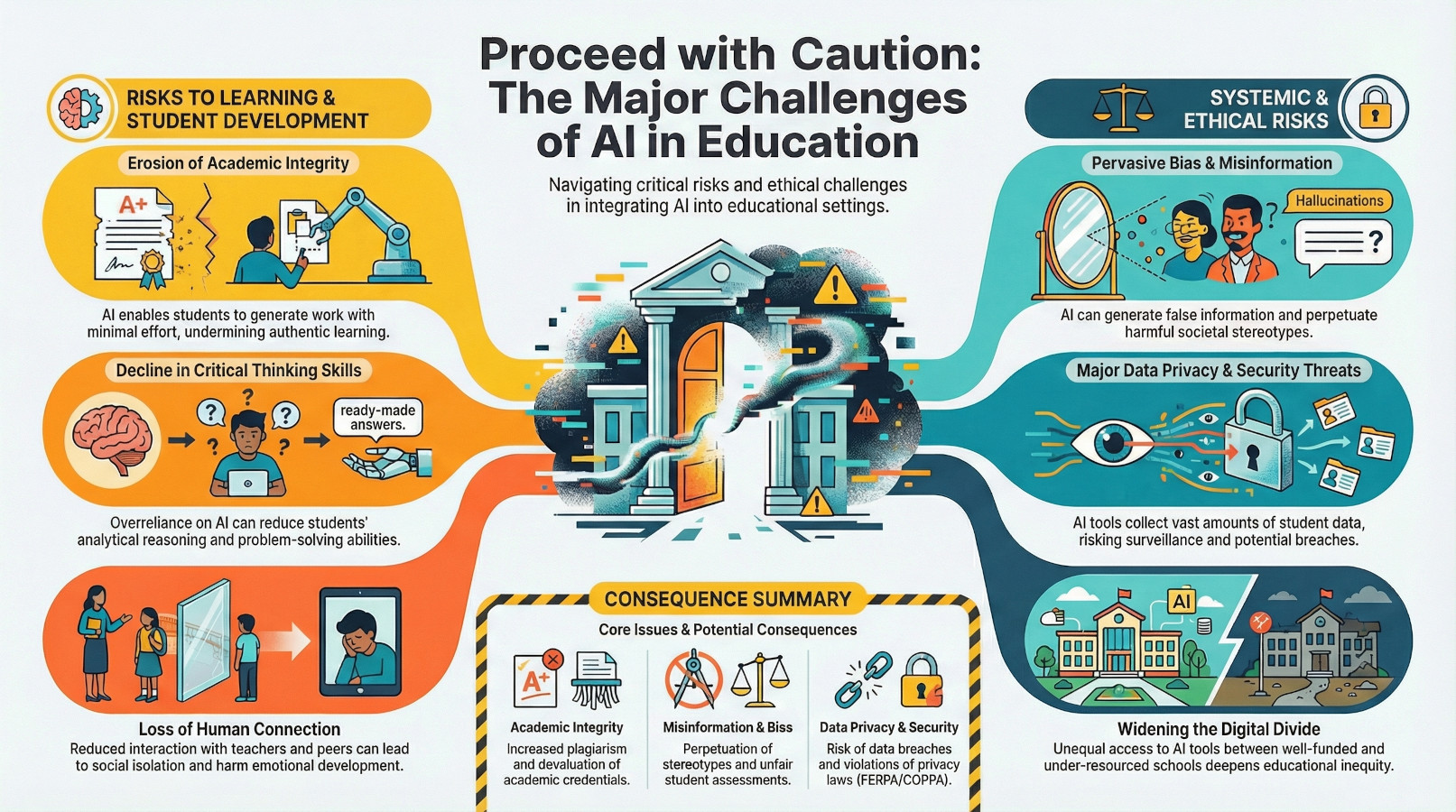
The debate over Artificial Intelligence in education is often reduced to a simple conflict: innovation versus cheating. While concerns about academic dishonesty are valid, they barely scratch the surface of AI's true impact. The most profound changes AI is bringing to the classroom are far more subtle, complex, and surprising than just making it easier for students to plagiarize.
This article moves beyond the obvious to explore four of these deeper, counter-intuitive consequences. From exposing fundamental flaws in our teaching methods to creating new forms of social inequity, AI is reshaping learning environments in ways we are only beginning to understand.
AI Isn't Just a Cheating Tool - It's a Mirror Exposing Flawed Education
The ease with which AI can complete assignments has sparked panic about academic integrity, but it also reveals an uncomfortable truth about education itself. The counter-intuitive argument is that AI's effectiveness is not just a technological feat; it's a diagnostic tool exposing fundamental weaknesses in current teaching methods.
If a task can be flawlessly executed by an AI without any real understanding, it fails to build durable, transferable skills like problem-solving and adaptability, and might not be a valuable learning experience in the first place. This realization is forcing a necessary and long-overdue conversation about educational reform. Rather than simply banning the technology, educators are being pushed to design assignments that AI cannot easily replicate—tasks that prioritize original thought, critical engagement, and the learning process over simple, rote assessment. Yet, this necessary shift in pedagogy is running headlong into a parallel crisis: the erosion of the very cognitive and social skills required to meet these new demands.
It's Weakening Core Skills and Deepening Student Loneliness
While AI can offer academic support, an over-reliance on these tools is eroding essential cognitive skills. A systematic review found that a staggering 75% of students perceived a reduction in their critical thinking skills due to their dependence on AI. When algorithms provide ready-made answers, students bypass the mental effort required for deep understanding, analysis, and problem-solving.
This cognitive impact is matched by equally concerning social and emotional consequences. The overuse of AI reduces opportunities for meaningful face-to-face interactions between students, their peers, and their teachers. This trend threatens to exacerbate the public health crisis of youth loneliness, a danger identified by the U.S. Surgeon General. This isn't just a hypothetical risk; a 2024 study of 387 university students found that the use of AI chatbots had a net negative effect on students' psychological well-being, feelings of loneliness, and sense of belonging.
Predictive Policing Isn't Predicting the Future; It's Reinforcing the Past
AI-powered predictive policing is presented as a futuristic tool to make law enforcement more efficient. These systems use historical crime data to forecast where and when future crimes are likely to happen, allowing police to allocate resources proactively. However, this isn't a theoretical problem—real-world systems like the "Strategic Subject List (SSL) used by the Chicago Police Department" and a similar system implemented by "Kent Police in England" have demonstrated a fundamental, counter-intuitive flaw: these systems risk amplifying and perpetuating existing biases.
If a marginalized community has been historically over-policed, the crime data from that area will be disproportionately high. An AI trained on this biased data will logically conclude that the area needs even more police attention. This creates a discriminatory feedback loop where the system reinforces the very biases it was fed, leading to further over-policing of the same communities. The NAACP has warned that these systems can worsen racial disparities in policing. Compounding the issue is the "black box" problem, where the proprietary algorithms are kept secret, making public accountability and oversight nearly impossible.
It's Quietly Building a Student Surveillance Network
To manage student activity and ensure safety, many schools have adopted AI-powered surveillance tools like Gaggle and GoGuardian. These systems monitor the digital activities of millions of students, scanning their emails, school documents, and web searches in real time for keywords related to self-harm, violence, or other perceived threats.
However, these tools create a significant problem of false positives. Discussions about video games can be mistaken for real-world threats, leading to unwarranted disciplinary action and even arrests. This constant monitoring also creates severe privacy invasions that often extend beyond school hours when devices are taken home. Following the Dobbs decision, concerns have also been raised that these systems could flag sensitive health-related queries, potentially endangering students seeking confidential information.
Social Control Is the Ultimate Goal
In state-level applications, the objective of AI surveillance moves beyond preventing crime and toward enabling widespread social control. China’s evolving social credit system is the most prominent example, built upon a staggering infrastructure that integrates over 600 million CCTV cameras with real-time facial recognition and gait analysis technologies.
This system doesn't just watch; it judges. AI algorithms autonomously detect "suspicious" behavior, flag dissenting speech online, and assign risk scores to individuals. Infractions that can lower a person's score include common offenses like jaywalking but also extend to posting critical comments online or associating with blacklisted individuals. The real-world consequences are severe: a low score can trigger automated disciplinary measures, including restricted access to loans, prohibitions on using high-speed rail, and other social penalties. This model represents a fundamental shift toward "proactive governance," where algorithms are used not just to react to wrongdoing but to actively enforce compliance and shape societal behavior on a massive scale.
It's Creating a New "AI Divide" Between the Haves and Have-Nots
The long-standing "digital divide" is rapidly evolving into a more pronounced "AI divide," which risks widening existing educational inequalities. Access to transformative AI tools is becoming a new marker of privilege, creating a stark contrast between what is possible in well-funded and under-resourced institutions.
This gap is already evident. Private institutions like Alpha School, with an annual tuition of around $20,000, are using sophisticated AI to deliver highly personalized curricula and achieve impressive results. In stark contrast, a recent report found that nearly one-fifth of state school teachers in England avoid using AI altogether due to resource constraints, compared to only 8% of their counterparts in private schools. This ensures that AI, rather than acting as a great equalizer, instead becomes an engine for calcifying socio-economic stratification for the next generation.
Conclusion: Looking Beyond the Algorithm
The uncomfortable truth is that these issues are linked: a pedagogical model weak enough to be mirrored by AI encourages the over-reliance that weakens student skills, which in turn creates a perceived need for the invasive surveillance used to manage them, all while the tools themselves create new forms of inequity. These interconnected challenges demand a more nuanced and critical conversation than one focused solely on academic integrity.
As we integrate AI into the architecture of education, are we ensuring it builds more than it breaks?