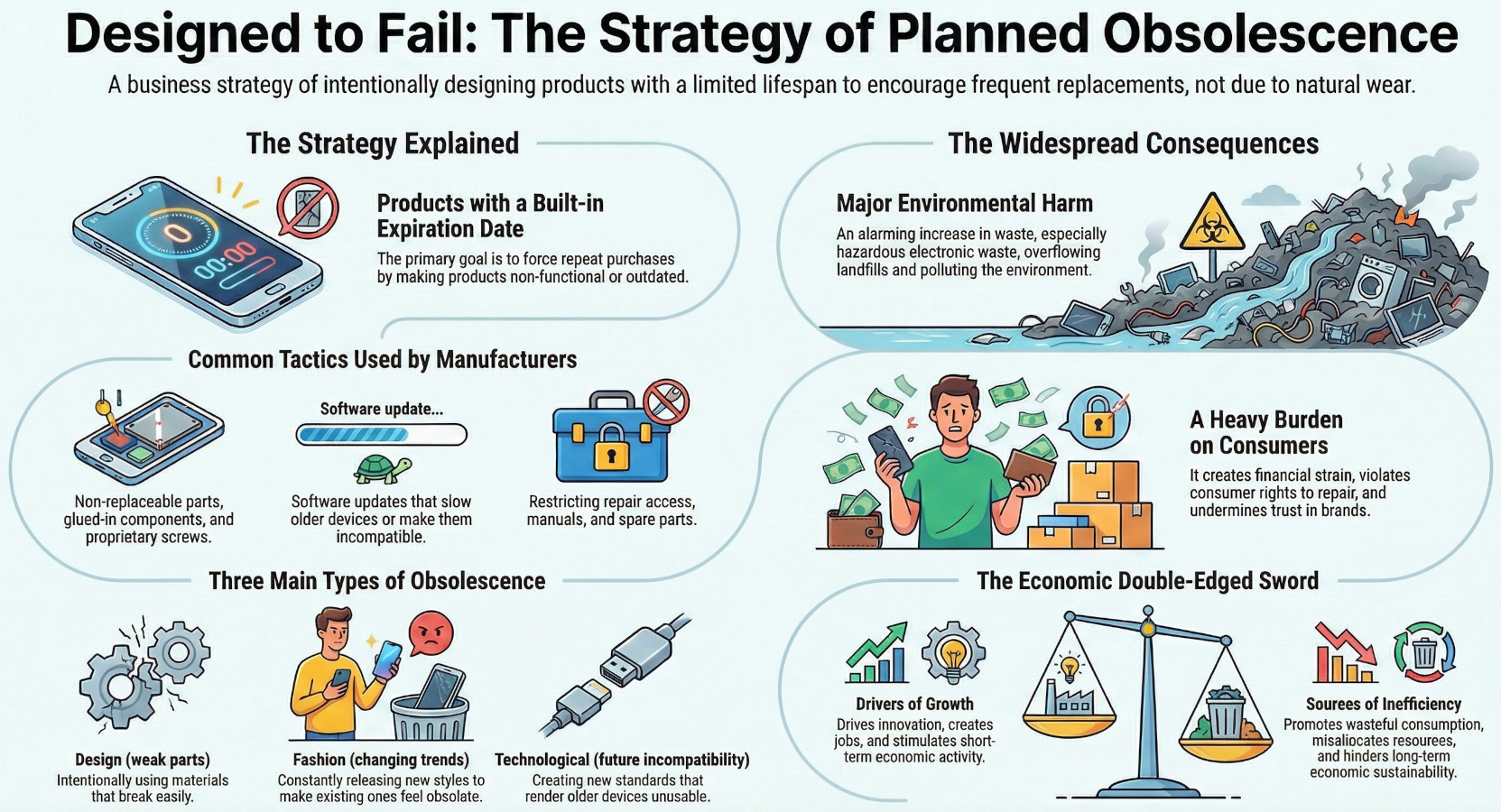
It’s a familiar form of technological gaslighting. Your smartphone, once lightning-fast, now crawls through simple tasks after the latest software update. Your washing machine gives up the ghost just a month after the warranty expires. You're left wondering: Is it just bad luck, or is something else going on?
The answer is yes; something else is going on. It’s a deliberate business strategy called "planned obsolescence," and it’s the reason your products don’t last. This isn't an accident or a
design flaw; it's a core business model designed to make you buy more, more often. This article will reveal four surprising truths about the system that ensures your things are built to break.
This engineered cycle of replacement imposes a cost that extends far beyond our wallets. Planned obsolescence has severe negative consequences for both the planet and society.
First is the environmental impact. The constant churn of products leads to a massive increase in waste and significant resource depletion. This is particularly alarming with electronics, creating a flood of "electronic waste, which often contains hazardous materials" that puts a significant strain on landfills and can contaminate ecosystems.
Second are the ethical questions and consumer harm. This practice actively undermines consumer trust and violates consumer rights by promoting unnecessary production and consumption, which creates economic inefficiencies. It also disproportionately affects lower-income individuals, who may struggle to afford the frequent, forced replacements. The impact is so significant that several studies have linked planned obsolescence to corporate environmental crime.
4. It’s Bigger Than Your Gadgets: A Core Concept in Science and Industry
Academic research shows that the study of obsolescence is a fundamental dynamic shaping our world, often with the goal of preventing failure:
The path to a healthier internet is built on four key pillars:
-
It's used to detect obsolete data in real-time databases to ensure that critical systems, like those for elderly fall prevention, are using only the most accurate information.
-
Engineers use it to forecast the obsolescence of electronic components in industrial systems with long life cycles, helping to manage and maintain essential infrastructure.
-
Researchers study obsolescence as a dual force to innovation not just in technology and economics, but in biology as well, treating it as a key driver of progress that must be understood and managed.
This elevates a common consumer complaint into a powerful paradox. The same principle weaponized to make you buy a new phone is simultaneously studied to protect our most important industrial and data systems from the very failure it’s designed to create.
Conclusion: The Future of Ownership
Planned obsolescence is not a conspiracy theory; it is a complex and deliberate strategy with wide-ranging and often hidden consequences. It fuels corporate profits at the expense of consumer wallets, ethical standards, and the health of our planet.
However, as consumer awareness grows, a powerful counter-movement is rising. The push for a "right to repair" and more sustainable design is gaining momentum, challenging the status quo and signaling that manufacturers may need to adapt and prioritize durability to maintain consumer trust.
As we become more aware of these hidden strategies, will we finally demand products that are built to last?